Black Friday and Your Finances: 5 tips to Help You Spend Wisely
Black Friday is often associated with attractive discounts, flash sales and the excitement of getting more for less. November is typically the month when businesses roll out these seemingly irresistible deals, a period many people anticipate purchasing items they’ve had their eyes on for a while at discounted prices. From electronics and household appliances to fashion and personal items, the promise of getting more value for less makes the period particularly appealing.
However, the excitement surrounding these deals can also make it easy to lose sight of financial priorities. A purchase that appears to be a great bargain may not necessarily be a good financial decision. You could end up spending money on things you never planned to buy, dipping into your savings or postponing important financial goals simply because something is on sale.
The goal should not be to avoid Black Friday altogether, but to approach it with a better understanding of your finances and a clear spending plan.
Here are 5 tips that can help you make better financial decisions during this period:
1. Apply the 24-Hour Rule
Not every purchase needs to happen immediately. When you come across something you want to buy, especially something that wasn’t on your original shopping list, give yourself 24 hours to think about it.
Use that time to consider whether you actually need the item, whether you can afford it and whether you would still want it if it weren’t discounted.
This simple pause can help you distinguish between a genuine need and a purchase driven by excitement.
2. The Envelope Budgeting Method
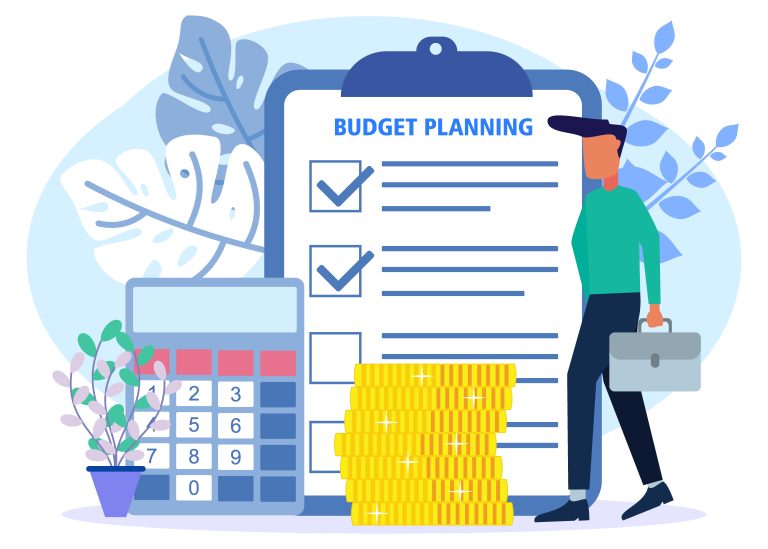
Before taking advantage of Black Friday deals, decide how much you can comfortably spend and set that amount aside specifically for shopping. The envelope budgeting method involves allocating a fixed amount of money to different spending categories and treating each allocation as a spending limit. For instance, if you’ve set aside ₦200,000 for Black Friday purchases, that’s your limit. Once the money is spent, resist the temptation to dip into funds allocated to other expenses or increase your budget just because you come across another attractive deal. This helps you stay within your financial limits and prevents overspending.
3. Consider the Opportunity Cost
Before making a purchase, think about what else you could do with the money. Every spending decision involves a trade-off. Money spent on one thing is money you can no longer use for something else.
Start by considering whether the item is something you genuinely need or simply want. For example, replacing a faulty refrigerator may be necessary, while buying another one simply because it is on sale may not be. Recognizing the difference can help you decide which purchases deserve priority.
You should also consider what that money could achieve if you allocated it differently. Could it go towards building your emergency fund, paying down debt, investing or meeting an existing savings goal? This doesn’t mean you should never spend on things you enjoy. It simply means understanding what you are giving up when you choose to spend.
4. Pay Yourself First
Your financial goals should not become an afterthought during a sales period.
Before allocating money to Black Friday purchases, make room for your savings and other financial priorities. If you regularly set aside a portion of your income towards an emergency fund, investment or savings target, maintain that commitment.
You can enjoy promotional offers without putting your financial plans on hold.
5. Avoid Borrowing to Fund Your Spending
A discounted price does not justify taking on debt, especially for non-essential purchases.
Be cautious with loans, credit cards and Buy Now, Pay Later arrangements. While these options may make purchases appear more affordable, they still create financial obligations that must be met.
Consider the repayment amount, interest, fees and due dates before committing to any credit arrangement. If you cannot comfortably afford the purchase without borrowing, it may be better to wait.
There is nothing wrong with taking advantage of a good offer, especially when it allows you to purchase something you’ve been planning for at a lower price. The problem begins when the excitement of spending takes priority over the reality of your finances. A little restraint before spending can save you from a lot of financial pressure afterwards. That is what having a spending plan helps you achieve.
So, as you shop this season, let thoughtful decision-making guide your purchases, not just the excitement of finding a good bargain.
Speaking of exciting things ahead, we’re counting down to our fifth anniversary. Vale turns five in just 35 days!
NOW TO THE NEWS
Naira Gains Support as Oil Prices Rise and Foreign Reserves Hit $55 Billion
The Nigerian naira is receiving stronger support from rising crude oil prices, increased domestic production and growing foreign exchange reserves, which have boosted the country’s dollar inflows. Bonny Light crude is currently trading at approximately $115 per barrel, while domestic oil production has reached a four-year high of over 1.53 million barrels per day, supported by improved security in the Niger Delta and reduced pipeline vandalism.
Nigeria’s foreign exchange reserves have climbed to approximately $55 billion, with net reserves reaching a record $46 billion. The increase strengthens the Central Bank of Nigeria’s (CBN) ability to provide dollar liquidity, meet external obligations and intervene in the foreign exchange market to manage pressure on the naira. Higher domestic interest rates and tighter monetary policies are also helping attract foreign portfolio investors, while increased local refining capacity is expected to reduce foreign exchange demand for imported petroleum products.
The naira has recently traded between N1,330 and N1,370 per dollar, with the official rate at approximately N1,346/$ and parallel-market rates ranging from N1,380 to N1,390/$. Sustained oil revenues and foreign investment inflows could support further stability, with stronger capital inflows potentially pushing the currency towards N1,320/$.
However, the outlook remains exposed to a decline in global oil prices, disruptions to domestic production and renewed insecurity in the Niger Delta. With crude production still below the government’s budget benchmark of two million barrels per day, Nigeria’s dependence on oil revenues remains a structural concern. Sustained foreign exchange reforms and diversification of non-oil exports will be important to maintaining the naira’s stability over the longer term.
DMO Opens November FGN Savings Bond Offer at 14.25% Interest
The Debt Management Office (DMO) has opened its November 2026 Federal Government of Nigeria (FGN) Savings Bond offer, with interest rates of 13.25% per annum for the two-year bond and 14.25% for the three-year bond. The three-year rate is higher than the 14.071% offered in October. Subscriptions opened on November 2 and will close on November 6, 2026, with settlement scheduled for November 11.
Retail investors can subscribe with a minimum of N5,000, while the maximum investment is N50 million. Both bonds pay interest quarterly, with the principal repaid in full at maturity. The securities are backed by the Federal Government and listed on the Nigerian Exchange.
The offer comes as allotments for FGN Savings Bonds rose to N47.25 billion between January and September 2026, up from N36.23 billion during the same period in 2025. The November issuance provides retail investors with another opportunity to earn fixed returns through government-backed securities, with the three-year option offering the higher interest rate.
Naira Reverses 42% of Third-Quarter Gains After October Depreciation
The Nigerian naira reversed approximately 42% of the gains it recorded between July and September 2026, following a depreciation in October. Data from the Nigerian Foreign Exchange Market (NFEM) show that the currency weakened from N1,329.50/$ at the end of September to N1,346/$ on October 30, representing a 1.05% depreciation during the month. Despite the decline, the naira remains stronger than its July closing rate of N1,369/$.
The currency’s performance in October was uneven, with periods of appreciation followed by renewed depreciation. After strengthening to N1,329.50/$ on October 19, the naira weakened to N1,370/$ on October 23 before recovering to close the month at N1,346/$. Overall, the movement erased part of the appreciation recorded during the previous three months, when the currency gained approximately 2.88%.
Meanwhile, Nigeria’s external reserves have improved, with net foreign exchange reserves reaching a record $46 billion in October, up from $34.80 billion at the end of 2025. The stronger reserve position provides additional capacity to meet external obligations and support confidence in the foreign exchange market.
Nigeria’s broader economic outlook also received a boost as the World Bank revised its 2026 growth forecast upwards to 4.3%, from 4.0% in 2025. The bank also projected economic growth of 4.4% in both 2027 and 2028. However, stronger reserves and improved growth projections have not prevented short-term exchange rate fluctuations, leaving the naira’s performance in the coming months dependent on developments in the foreign exchange market and the wider economy.